



[MonsoonJournal.com] South Indian Veena Specialist Rajesh Vaidya’s Veena Voyage Recital held at Winston Churchill Collegiate on Saturday, November 4, 2007

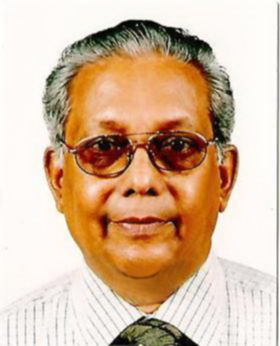
Rajesh Vaidya on the Veena accompanied by Jeyanthi Ratnakumar of Veenaalayam

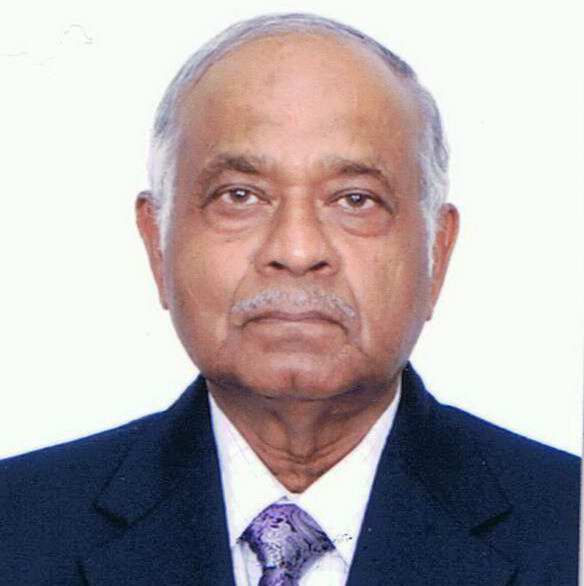
Mohan Vaidya,brother of Rajesh who was the vocal artiste

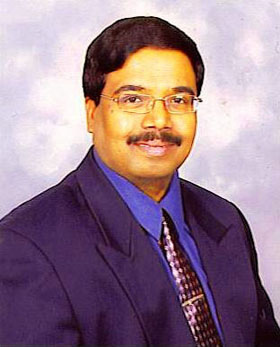
Rajesh’s daughter Maalavika singing while the father plays the Veena

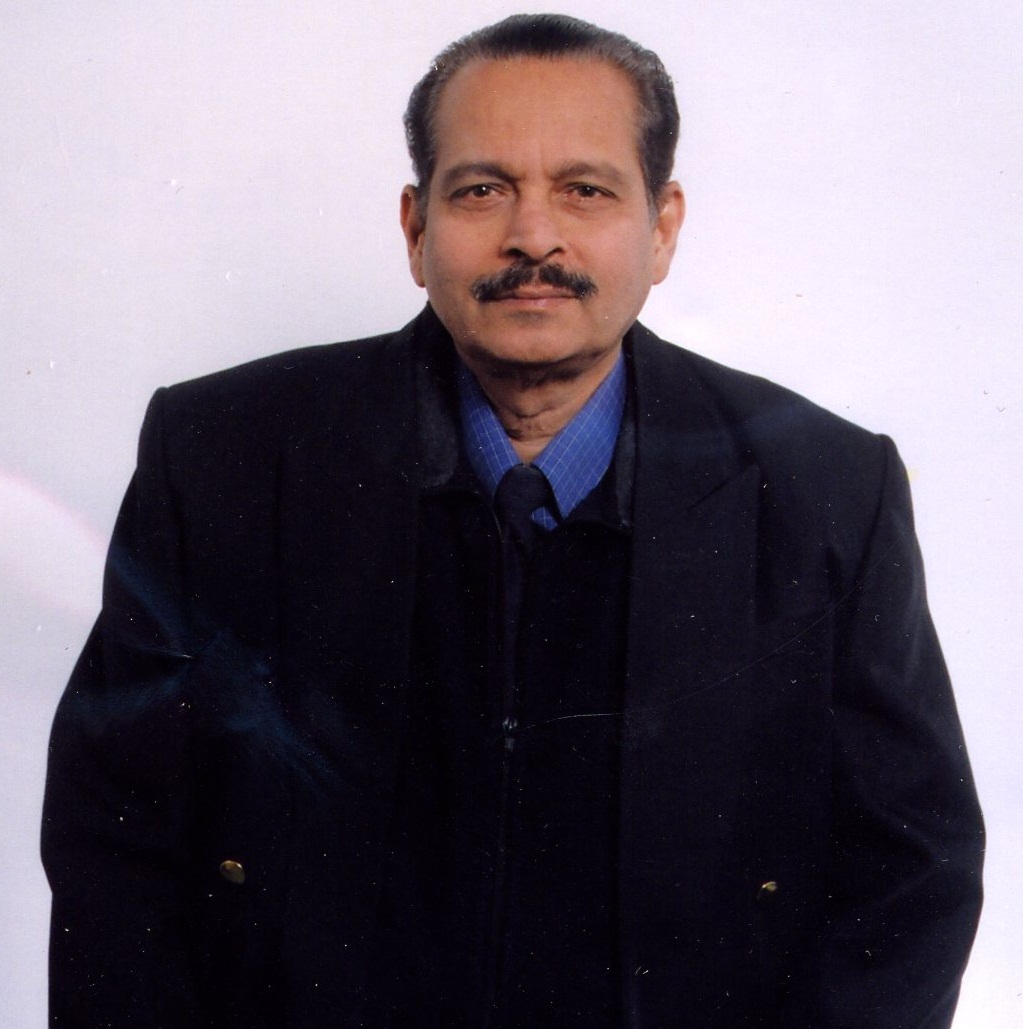
Lawyer Bala Balasubramaniyam presenting an Award to Rajesh Vaidya

Maalavika Vaidya with Jeyanthi Ratnakumar of Veenaalayam

[Photo Courtesy: focusdigitalstudio]

[monsoonJournal.com]

by Raymond Rajabalan

Music has a powerful effect on human experience. Students of religious phenomena have long recognized that music transcends our understanding and appeals to our intuitive nature. It is not surprising, then, that music played an important part in the worship of biblical communities, as a way of approaching the mystery of God and of expressing the joy of his presence.

This article discusses the role of music in the worship of Israel and of the early church, by way of establishing a biblical foundation for music in the Christian worship of today.

Music in Israelite Worship

Israelite prophets were musicians.

  • During the exodus Miriam the prophetess, taking her tambourine, led the women in song and dance, celebrating the Lord’s triumph over the Egyptians (Exod. 15:20-21).
  • Saul encountered a band of sanctuary prophets who prophesied accompanied by instruments (1 Sam. 10:5). Isaiah composed songs, including one celebrating the Lord’s deliverance of those who trust in him (Isa. 26:1-6).
  • The public regarded Ezekiel as “one who has a beautiful voice and plays well on an instrument” ( Ezekiel 33:32).

David, a musician as well as a warrior, established the place of music in the worship of the Lord. Even before the sacrifices had been moved to Jerusalem, he instructed the Levitical musicians to celebrate the ark’s journey to Zion (1 Chron. 15:16-24), and appointed Asaph as chief musician in charge of continual thanksgiving and praise (1 Chron. 16:1-7). The description of this activity (1 Chron. 25:1-7) suggests that these musicians led in a spontaneous and overwhelming outpouring of worship, especially at high moments like the dedication of Solomon’s temple (2 Chron 5:11-14). This may be the “new song” to which the Psalms refer (33:3, 40:3, 96:1, 144:9, 149:1). Many Psalms perhaps originated in this pre-temple Davidic worship centering around the ark of the covenant.

In the temple, music functioned as a “sacrifice of praise,” an offering of song to accompany the offering of sacrifice. Under the Judean rulers, the performance of music became regulated and standardized. The titles of 55 Psalms refer to the music director, with instructions for performance on various instruments or using certain tunes. This psalmody remained a feature of Israelite and Jewish worship. After the exile, Ezra recruited more than 200 Levites for service in the sanctuary (Ezra 8:18-20).

After the Babylonian exile, most Jews lived in the Dispersion (areas outside of Palestine) and could not participate in temple worship. Therefore the synagogue arose for prayer and the study of the Scriptures. The Psalms continued to be sung, and other portions of the Scriptures as well as prayers were chanted according to a developing system of “modes.” Such Jewish music influenced the worship of the early church.

Israelite worship music was both vocal and instrumental; the sanctuary orchestra contributed to the celebration of Israel’s covenant with the Lord. Its instruments fall into the same general classes with which we are familiar — percussion, winds (pipes) and strings. Horns, trumpets, cymbals, harps and lyres were used when the ark was brought to Mount Zion, and their continued use is reflected in their mention in the Psalms. The sanctuary instruments were not solo instruments, but sounded simultaneously to call the assembly to worship (Psa. 98:6). Strings and pipes, if used, probably played the modalities (tune elements) in the psalm being sung, with perhaps distinctive patterns of ornamentation. Horns, trumpets and cymbals added to the festive joy by creating a larger sound. The selah of the Psalms may have been an instru`mental interlude, or a “lifting up” of sound by both singers and instrumentalists. Tambourines, usually played by women, are mentioned in connection with dancing at Israelite festivals (Psa. 68:25), but were not used in the sanctuary where only men served as priests and musicians.

Worship Music in the New Testament

The worship of the emerging Christian movement did not produce new forms of music, but shared the characteristics described above, many of which are still found in the music of historic liturgies. Clearly, the worship life of the early church included psalms and other forms of song.

The New Testament mentions worship music in several places.

  • The gospel story begins with a hymn of praise on the lips of the heavenly host, “Glory to God in the highest” (Luke 2:14).
  • Reading the lesson from Isaiah in the synagogue of Nazareth (Luke 4:16-20), Jesus probably intoned it according to the custom of the time.
  • The Gospels record that Jesus and his disciples sang a hymn after the Last Supper (Matt. 26:30; Mark 14:26), probably the “Great Hallel” (Psalms 113-118) of the Passover tradition.
  • Luke records that Paul and Silas were singing hymns in prison at Philippi when an earthquake occurred (Acts 16:25). Paul urges the Christians of Ephesus and Colossae to give thanks to God in “psalms and hymns and spiritual songs” (Eph. 5:19; Col. 3:16). Describing the assembly of the church of Corinth, he remarks that “everyone has a psalm” (1 Cor. 14:26) which must blend with the contributions of other worshipers in an orderly service. Perhaps “psalms” were the biblical psalms, while “hymns” could have been Christian music in praise of Christ and “spiritual songs” more spontaneous worship expressions.

Luke quotes several hymns in the beginning chapters of his Gospel. In addition to the Gloria in Excelsis mentioned above, he includes the Magnificat or Song of Mary (1:46-55), the Benedictus or Song of Zechariah (1:67-79) and the Nunc Dimittis or Song of Simeon (2:29-32). Although spoken by several figures in the story of Jesus’ birth, these hymns came to be used in Christian worship at an early period. Paul quotes what may have been another song, “Awake, O sleeper and arise from the dead,” in Eph. 5:14. Scholars have suggested that other passages in Paul’s letters are based on primitive Christian hymns in praise of Christ, such as Philippians 2:6-11, Colossians 1:15-20 and 1 Timothy 3:16. Such hymns may have been composed to reinforce Christian teaching about the nature of Jesus’ Messiahship.

The Hosanna hymn of the crowds at Jesus’ entry into Jerusalem (Mark 11:9, based on Psa. 118:26) became part of the historic Christian eucharistic celebration.

Revelation to John

Musical expression of Christian worship reaches its New Testament climax in the hymns of the Revelation to John.

In John’s vision, acts of praise before God’s throne accompany the dramatic unfolding of events on earth. These hymns glorify the Creator (4:11), proclaim the worth of the Lamb (5:9-10; 5:12), extol both the Father and the Son (5:13; 7:10; 7:12), celebrate God’s triumph over the enemies of his people (11:16; 11:17-18; 12:10-12; 19:1-3; 19:6-8), and proclaim his justice (15:3-4; 16:5-7).

Perhaps these hymns reflect the actual worship practice of the church near the end of the first century. If so, the Revelation offers a window not only into the judgments of God in the earth but also into the development of Christian liturgy and hymnody.

The New Testament does not supply enough detail to reconstruct the exact musical content of developing Christian worship. Since the Hebrew Scriptures were still the authority for teaching and practice (1 Tim. 3:16-17), their broad principles regarding music must have remained the norm. The young church was a community under persecution, and could not apply the full resources of biblical celebration to its worship assemblies. Nevertheless, the evidence shows that music played a vital role in the worship of the emerging Christian community.

NADASWARAM

Some interesting Facts about Nadaswaram from the Word of God

This sacred instrument is unique;  it has a special place in the Bible. .There is some divinity about this instrument. We have seen this instrument played at many auspicious occasions. Nadaswaram does not belong to any one sect or one religion.

  • In Ezekiel 28:13 we read that God gave this instrument to Cherub to worship Him. In the course of time Cherub was cast down by God because of his high haughtiness. Cherub may have been cast down but the music was always cherished by God. This instrument still holds a significant place before God. We repeatedly see this instrument played at many occasions in the Bible. 
  • In Genesis 31:27 we see Laban says to Jacob “Why did you run off secretly and deceive me? Why didn’t you tell me, so I could send you away with joy and singing to the music of tambourines and harps?”  We notice that this instrument was an integral part of Joyful occasions accompanied by singing and music.
  • In 1 Samuel  10:5 when Samuel anoints Saul, this instrument was again used. This was accompanied by prophetic utterances.An instrument that is so dear to our Lord has been forgotten through time and has been used to glorify pagan Gods. It is my desire to Worship and Glorify our Lord in Heaven through the Music of Nadaswaram.

[monsoonJournal.com] The main method of cooking food was long and slow in a large pot or cauldron or on spits over an open fire. This cauldron was also sometimes used as a crude type of oven, sometimes being turned upside down over hot stones or the cooling embers.

Next came The Vikings (c794 AD) who introduced more complex sea fishing techniques, enhancing and enlarging on the seafood consumed, but it was probably the arrival of the Anglo Normans around the 12th century AD who had a more profound influence on Irish cuisine. Not only did they introduce many vegetables and herbs from the Mediterranean, but also the all-important Potato in the 16th century, which was to become an important staple in the diet, particularly of rural Ireland. Unfortunately, so much so that The Potato Blight of 1845 made famine and the death of many unavoidable.

It’s interesting to note that cattle wasn’t always slaughtered for its meat, butused for dairy purposes. This can be explained by the fact that a man’s wealth was judged by the amount of cattle he owned.

Current Day Cuisine

What most people consider to be today’s traditional Irish cuisine originated in the kitchens of the farmers of the past, not from the nobles or gentry. It is good, wholesome food made from locally grown/reared produce. Ireland’s lack of natural (industrial) resources back in the late 1800’s meant that, unlike much of the rest of western Europe, its agricultural practices remained in tact, thus preserving a unique culinary identity.

Potatoes still feature prominently in today’s diet and old time recipes like Irish Stew and Dublin Coddle remain firm favorites. Lamb and pork or bacon are still popular meats as well as fish such as salmon and shellfish.

A Full Irish Breakfast (very similar an English breakfast) consists of bacon rashers, eggs, sausages, baked tomatoes, mushrooms, white pudding, black pudding, fresh fruit, toast or scones with butter and marmalade. In Northern Ireland (still part of the UK) they add fried potatoes or Potato Farl to it and call it an ‘Ulster Fry’ .

Lunch in rural Ireland is usually the largest meal of the day consisting of meat with vegetables and potatoes although most city dwellers would substitute this with sandwiches and/or soup and have their main meal in the evening. The Irish are also famous for their soda bread and teatime favourites such as barm-brack and boxty bread, not to mention Guinness and whiskey….both of which are excellent when used in certain dishes. renowned as the only fare for subsistence farmers in the first half of the 19th century, a time when a significant portion of the population lived in agricultural

Irish Food - More Than Potatoes

Ask anyone if there is an Irish national food and the answer, more than likely, will be the “potato”! The potato is certainly poverty. The blight, which hit in 1845 and raged on and off for the next five years resulted in the death of an estimated one million Irish, and the emigration of another 1.5 million.

Still, it is important to remember that the potato was unknown in Ireland prior to the 16th century when Sir Walter Raleigh is credited with bringing it to Ireland from America. Ironically, it was at first considered too much a luxury for peasant farmers and was reserved for the tables of the wealthy. Before long, however, it was apparent that the potato was immensely suited to cultivation in Ireland’s climate. It thrived throughout the island, even in those areas with relatively poor soil in western Ireland that had become home to the rapidly growing Irish population. With the forced subdivision of a farmer’s holding among his surviving sons under the conacre system it became typical for a family to subsist off the potatoes grown on less than an acre of land.

While the potato was obviously the mainstay of Ireland’s poor, the more prosperous lived on a more varied diet of food grown on larger Irish farms. These foodstuffs exceeded the needs of the larger farmers and were in fact exported from Ireland as others were starving.

Cattle had always been valued in Ireland, back to the time of the Celts. They were held not for their meat but as a source of dairy. Buttermilk was a supplement to the potato diet that actually meant that the peasant diet was reasonably sound nutritionally.

Pork, and lamb, were the more affordable meats. Easy to manage, the Celts let the pigs range outside year round. In later centuries, a pig could often make the difference in a farming family’s standard of living. Raised within their home, it would be sold when grown to provide cash for rent payments or to buy food during the lean summer time when the potato crop was not ready for harvest. Meats were generally roasted or prepared in some sort of stew (such as the well-known Irish (Lamb) Stew). The importance of seafood in the Celtic and Irish diets can’t be overlooked. Not only were fish harvested from the seas surrounding the island but in the rivers and lakes as well. Like meat, they were grilled, roasted, or prepared in stews.

Oats, barley and wheat were the primary grains raised on the island. The oats, eaten as porridge in the style of Ireland’s Celtic neighbor, Scotland, was the subsistence fare before the potato took hold. (The presence of mills in the Griffith’s Valuation is likely evidence that grain was being grown in the area.) Barley, of course, wound up in beverages like stout. Bread was baked, with honey as a primary sweetener.

Root vegetables such as carrots, turnips, and leeks, were commonly grown, both before and after the potato’s introduction. Other produce either grown or collected from the wild included sorrel, nettles, watercress, and various fruits such as wild cherries and an assortment of berries. Apples were the primary cultivated fruit.

Beef in Guinness Stew

The Guinness in this recipe has the same function as the wine in Coq Au Vin - the acid and moisture combined with the long, slow cooking help tenderize the tough but flavorsome meat.

2 1/2 lb/ 1 kg shin of beef
2 large onions
6 medium carrots
2 tbsp seasoned flour
a little fat or beef dripping
1/2 cup dry cider
1/2 pt/ 250 ml/ 1 cup Guinness with water
sprig of parsley
(serves four)

Cut the beef into chunks and peel and slice the onions and carrots. Toss the beef in the flour and brown quickly in hot fat. Remove the beef and fry the onions gently until transparent. Return the beef and add the carrots and the liquid. Bring just to the boil, reduce the heat to a very gentle simmer, cover closely and cook for 1 1/2 - 2 hours. Check that the dish does not dry out, adding more liquid if necessary. Sprinkle with chopped parsley and serve with plainly boiled potatoes.

Contributed by Chef Nate and Scott

By Dr. A. R. M. Imtiyaz

[monsoonJournal.com]
General thoughts on Ramadan

“Ramadan is the (month) in which Qur’an was sent down, as a guide to mankind, and a clear guidance and judgment (so that mankind will distinguish right from wrong). Whoever among you witnesses the month of Ramadan should fast through it…” (2:183)

Ramadan, the third pillar of Islam, falls on the ninth month of the Islamic calendar established in the year of 638CE. Ramadan is derived from an Arabic word for intense heat and scorched ground. “Ramadan is the month during which the Quran was revealed, providing guidance for the people, clear teachings, and the statute book. Those of you who witness this month shall fast therein. Those who are ill or traveling may substitute the same number of other days. Allah wishes for you convenience, not hardship, that you may fulfill your obligations, and to glorify Allah for guiding you, and to express your appreciation.”[2:185] Ramadan divides into three parts. They are, (1) Rahmat, which mean mercy of God, (2) Maghfirat means forgiveness of God, (3) Nijat which means salvation.

Tarawih praying is one of the key elements of the month. Tarawih is an Arabic phrase referring to extra prayers. Muslims perform this prayer after Isha prayer. Muslims who identified with Sunni school perform Tarawih every night of the month. South Asia , home to Sunni Muslims, witness Tarwih during Ramadan. However, there is no unique position among the Muslims as to how many Salah should be performed in Tarawih which are held in the (Sunni) mosques every night of the month. However, Muslims who attach to Shia school, the second largest denomination based on the Islamic faith after Sunni Islam does not practice Tarawih. Shias view that Tarawih prayer as a Bidah (type of innovation) and thus caution Muslims to excuse themselves from it. In order to gain Almighty God’s love and appreciation, instead of performing Tarawih, Shia perform the night prayer during Ramadan just like any other night. This night prayer (Salah) commonly known as Tahajjud (ta-hajj-od).

Generally, during whole section of the Qur’an is recited during the praying in Ramadan. This opens the gate to complete the entire Qur’an by the end of the month. Sunnis predominant group among the Muslims believe it is conventional practice to do a khatm (complete recitation) of the Qur’an during the Ramadan by reciting at least one chapter (Juz) per night in Tarawih. Moreover, Shia Muslims regularly read Qur’an and attempt to complete it by the end of the month.

Ramadan demands both spiritual and physical observance of thirty days of fasting during the daylight hours. Right through the month of fasting, Muslims across the world including South Asia, regardless of their bitter ethnic and sectarian divisions, observe a fast from dawn to dusk. Fasting can help to purify the body and mind if those who fast seriously and sincerely committed to the ritual. Muslims also believe that Ramadan helps to raise Islamic values of peace, justice and equity.

Ramadan can help those who fast to practice the teachings of Islam. It also can seriously discourage those who fast in refraining from unpleasant feelings such as anger, envy, greed, and gossip. Qur’an encouraged Muslims to read it regularly during the month and dissuade Muslims having sexual pleasure during the day time. That is to say during fasting in the day sexual intercourse is not allowed but is permissible after the fast.

Fasting can help to cultivate righteousness and humility if it is practiced in its form. Fasting is not simply a practice of abstaining from food or drink; it is all about how those who fast control their mind and mature themselves to obtain wisdom and to seek a spiritual path. Thus, it must be observed strictly in order to gain the fruits of fasting.

Why do Muslims fast?

(A)To follow God’s order

One of Almighty God’s injunctions, directed to Muslims (men and women) to fast. “O you who believe, fasting is prescribed for you…”(2:183) and “…whoever witnesses the month of Ramadan should fast through it…” (2:185) the phrase “O you who believe” is referring to those who attach to Almighty (Allah) God’s command and testify that “La ilaha illa llaha Muhammadu-r Rasululla (there is no God but God Muhammad is the Prophet of God) and follow the Sunnah of His Prophet, Muhammad (Peace Be upon Him). Clearly, Ramadan fast is a divine order obligatory to all able-bodied Muslims who are free from compelling excuses.

(B) To practice the tradition

“O ye who believe, fasting is prescribed for you as it was prescribed for people before you …”(2:183) In fact, fasting was not an untainted innovation of Prophet Mohamed (PBUH). It was practiced well before the birth of Prophet Mohamed (PBUH). As a matter of fact, Adam (Sal) who was believed to be the first creature of mankind by Almighty God practiced fasting. Ramadan had been a practice of all the Prophets of God and their followers. Qur’an mentions that Musa (Sal) fasted for 40 days (2:51) and thus, the Jews termed “Jewish Passover” and the Prophet Mohamed (PBUH) told us that Dawud(Sal) used to fast for half of the year (this involves fasting on every alternate day). Jesus or Isa (Sal) was also reported to have fasted for 40 days and thus, the Christians termed it “the Lent”, usually observed before Easter festival. Since these Prophets were messengers of God, it can be seen that by asking to follow the prophet Mohamed to fast. In other words, Almighty God intends to draw creature’s attention to the practice and tradition of his messengers who brought his message to the mankind.

In Mecca, Prophet Mohamed found that a group called Sabians practiced praying and making ablution, or ceremonial washing, before each prayer. Ramadan was a pagan ceremony practiced by the Sabian. 1. In the Qur’an, Mohammed called the Sabians “people of the book” like the Jews and Christians.

Moreover, Ramadan has its pagan roots originated in India. The observance of fasting to honor the moon, and ending the fast when the moon’s crescent appears, was practiced with the traditions of the Eastern worshippers’ of the moon. Both Ibn al-Nadim and the Shahrastani tell us about al-Jandrikinieh, an Indian sect which began to fast when the moon disappeared and ended the fast with a great feast when the crescent reappeared. 2

(C) To learn how to achieve faithfulness

“O ye who believe, fasting is prescribed for you…so that you will (learn how to attain) piety” (2:183) Human nature is susceptible to sins and transgression. This may be due human struggle to secure wealth and positions. Qur’an warns against gossiping, backbiting, slandering, hypocrisy, lying, cheating, duping, and hurting. Islamic school of thoughts believes that Ramadan can help to challenge those ill-behaviors and actions if one performs fasting with pure intentions. Ramadan teaches how to put an end to ill-actions and behaviors and take a step close to Almighty God

(D) To reap the full reward of the Night of Power (Lailat-ut Qadr)

“Indeed We have revealed it (Qur’an) in the night of Power. And what will explain to you what the night of Power is? The night of Power is better than a thousand months. Therein descends the Angels and the Spirit by Allah’s permission, on every errand: (they say) Peace” (continuously) till the rise of Morning!” (97:1-5)

Muslims believe that the first divine revelation to Prophet from Almighty God took place in the Night of Ramadan- Lailat-ut Qadr. God picked the night because of the special blessings in it. It is called the night of Power (Lailat-ut Qadr) or the night of blessing (Lailat-ul Mubarak). It is this night that all Muslims are invited by God to look for in the month of Ramadan. Specifically, the night is in the last ten days of Ramadan and usually in one of the odd days (i.e. 21, 23, 25, 27 and 29th). A Muslim is expected to perform naafilah, recite the Qur’an, do zikr etc in the night. Since no one knows precisely which of the odd days the night is, Muslims are expected to be in seclusion (itikaf) during the last 10 days of Ramadan and the best place to be so is in the mosque.

Muslims do not want to miss the Night. It is this very reason that every Muslim wants to witness and reap its full blessing by fasting during the days of the month of Ramadan. As Ramadan fast is inextricably tied to the Night of Power (Qur’an 2:183) it follows that any Muslim who wishes to benefit from the Night of Power must fast during the month of Ramadan.

Critiques on Ramadan

Muslims believe that during the month of Ramadan they strictly monitor both, their emotional and physical feelings. Also they think fasting is very true, because those who fast do not eat (during the day light). However, critiques point that though they do not eat during the day light, they do eat (freely) their meals during the night. Since the Muslims believe that God allows them to eat while it is dark, they eat a large meal in the late evening and wake up early in the morning for another big meal. In other words, they simply change the time of their meals from daylight to darkness.

In fact, Muslims those who are financially able enough, continue to consume large meals during Ramadan. What is also true is that rather than simple meals which they have during the year, they arrange for elaborate meals, spending sometimes triple or more money on food during Ramadan than in any other month. Thus such reality of meals consuming during the Ramadan lead critiques to suggest that Muslims eat a lot during the Ramadan than non-Ramadan period. Muslims need to open their eyes on this critique in order to strengthen the meaning of Ramadan.

Conclusion

Societies, whether they are located in the corner of North or in the South, consist of only of two classes-poor and rich. Islam urges economically able (rich) Muslims to be generous to economically disadvantaged (poor) class. Islam puts particular attention on the end of Ramadan to financially help those who are in need. Moreover, Ramadan steers Muslims in the right way in terms of spiritual and material life. It can indeed help cultivate wisdom, kindness and compassion among Muslims if it is observed properly with pure intentions. Ramadan will come to an end with the festival of Eid al-Fitr. This year, it is highly likely it can occur on October, 13th 2007. A sense of kindness and appreciation dominate these festivities. Muslims need to stick to the lessons Ramadan has thought to them.

May the Creator God give us courage in this world and in then hereafter and give us strength and good health to be able to fast during the month of Ramadan. Also, God give us equality and peace to all of us-Muslims and non-Muslims.

1 Abdel Allah ibn Zakwan Abi al-Zanad. See Ibn Qutaybah, page 204;Cited by Sinasi Gunduz, The Knowledge of Life, Oxford University , 1994, page 25

2 Ibn Al Nadim, Al-Fahrisit, page 348

[Grand Mosque, Puttalam, Sri Lanka – Picture by HumanityAshore.org]

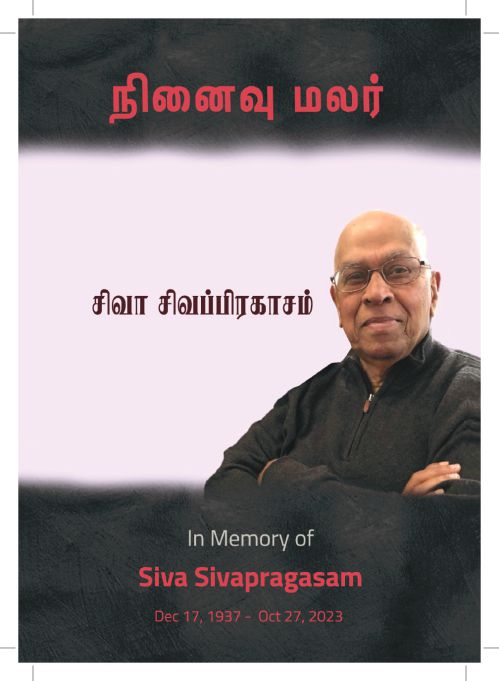
by Siva Sivapragasam

This article is being published in commemoration of Late Kumar Ponnambalam’s Birth Anniversary which falls this month.

“Why is this age worse than earlier ages?
In a stupor of grief and dread
Have we not fingered the foulest wounds
And left them unhealed by our hands?”
-Anna Akhmatova, Russian Poet

Kumar Ponnambalam was the proud son of a more proud father.

Kumar’s brutal killing by an assassin’s bullet was indeed a tragic loss to the Sri Lankan Tamil community and it stifled the independent voice of a leader who expressed his opinions without fear or favour.

My association with Kumar dates fifty years ago when we were both schoolmates at Royal College, the prestigious educational institution in Sri Lanka. As a youngster, Kumar was a non-assertive, shy boy quite often smiling away at the school boy pranks of his fellow mates. But even at the tender age of ten, he displayed a certain amount of forthrightness and frankness in whatever he spoke or said. It is perhaps these traits in his character that blossomed in later years of his life as a lawyer and politician. His father the late G.G.Ponnambalam, the silvery tongued orator and brilliant criminal lawyer cum politician, was the founder champion of the Tamil cause with his famous political slogan of the fifty-fifty campaign, a cry for equal representation for the Tamil minorities in the Legislature. This had its effect in the classroom when Kumar was nicknamed “fifty fifty” by his Math teacher “Conner Rasa”.

In later years, Kumar once told me that he was unaware at his young age what this “fifty-fifty” was, and he gathered guts to ask Appu (fondly referred by him of his father) what was all this fuss about “fifty fifty”. The little lecture the son received from the patriarch was perhaps the foundation on which he built his political career and understanding of Sri Lanka’s chequered political history .Ponnambalam Snr. was so wedded to this fifty-fifty theory that he put forward this political dogma before the Soulbury Commission on constitution making and laboured for two long days to prove his point This is reminiscent of what the powerful and controversial former Indian Defense Miinister Krishna Menon did when he championed India’s cause for hours before the United Nations General Assembly on the Kashmir issue.(incidentally, Menon, who was running a high temperature when he spoke, slumped in his chair after the marathon speech and was wheeled out of the U.N.Assembly rostrum-(source:Krishna Menon by T.J.S.George)

History is now repenting that reasonable requests of minorities in a multi-racial country had been ignored at an early stage and now resulting in much bloodshed and almost a parting of the ways for the two communities. Astute political leaders like Dr.Colvin R.De Silva and Mr.S.J.V.Chelvanayagam were prophetic when they remarked in the Legislature on more than one occasion that if reasonable requests of minorities are not granted it could well lead to more drastic demands which can end up in requests for a separate state. Unfortunately we have now reached that stage in Sri Lanka’s troubled and chequered political history.

Kumar’s tragic death is in a way a reflection of violence in politics for differences in opinion and political thinking. Perhaps his boldness and frankness in his thoughts, speeches and writings made him pay the supreme sacrifice with his life. It is very unfortunate that our politicians have not arisen to a level to at least give the opponents their right to differ in thinking. The great French philosopher Voltaire once remarked “I may differ from what the other man says but will defend till death his right to say it”. Kumar’s contribution to the Tamil community and political thinking is that he expressed his thoughts publicly in a forthright and frank manner. Whether we agree with his thinking or not is a different question. Speaking from the capital, in an environment of fear psychosis, among the minority community, he did not mince his words or camouflage his thinking when it came to espousing the cause of his community’s rights and obligations.

Kumar’s loss to the community at this juncture of its history is both tragic and irreparable. Let us sincerely and truthfully hope that his cherished vision of fair and just rights for his community will one day come true in the near future. The future pages of History will only reveal that .In conclusion it could be said that ‘His life was gentle, the elements were so mixed in him that Nature would stand up and say-This was a man’. [monsoonJournal.com]

By Nate V

Pad Thai

Related: Taste of Thai

Serves 4 as a noodle course or 2 as a main course

10 oz Thai rice noodles
1/4 cup tamarind paste
1/4 cup warm water

6 oz skinless, boneless chicken breast
6 oz fried tofu
6 tbsp roasted unsalted peanuts
2 tbsp fish sauce
2 tbsp sugar
2 tbsp lime juice
1/2 cup vegetable oil
2 tsp chopped garlic
8 large shrimps, shelled and deveined (50 oz)
4 eggs
1/2 cup bean sprouts
3 stems green onion, cut into 1-inch pieces
1/2 tsp roasted chilies

Strips of red pepper and green Pepper
Fresh coriander leaves
Wedges of lime

Soak noodles in plenty of cold water for at least 2 hour. Combine tamarind paste with a 1/2 cup warm water in a small bowl and let soak for at least 30 minutes. Slice the chicken into 1/4-inch strips. If you find it difficult to cut thinly through fresh meat, leave it in the freezer for 15-20 minutes to harden slightly and then slice. Reserve. Slice the fried tofu into 3/4-inch cubes. Reserve. Blend or process peanuts into coarse meal. Reserve. Return to your reserved tamarind paste in its water. Mash it and transfer the mud-like mixture to a strainer set into a bowl. Mash and push with a spoon, forcing liquid to strain into the bowl. Scrape off the juice that clings to the underside of the strainer. You will have about 5 tbsp of tamarind juice. Add to it the fish sauce, sugar and lime juice. Beat to thoroughly mix and reserve. Discard the solids left in the strainer. Heat oil in a wok (or large frying pan) until it is just about to smoke. Add garlic and stir, letting it cook for about 30 seconds. Add chicken and stir-fry for 1 minute. Add tofu and shrimps and stir-fry for 1 more minute. Break eggs into wok and let them fry without breaking them up for 1-2 minutes. While eggs cook, quickly drain the noodles and then add to wok, giving them a quick fold, stir-frying for 1 minute from the bottom up. Add reserved tamarind juice, etc. (from step #6) and continue stir-frying, mixing everything together for 1-2 minutes. Your noodles will have subsided to half their original volume and softened up to al dente. Add about 2/3 of the reserved ground peanuts and stir. Add about 2/3 of the bean sprouts and all the green onion pieces. Stir-fry for 30 seconds and take off heat. Transfer noodles to a serving dish and sprinkle with roasted chilies. Top with the rest of the ground peanuts, the rest of the sprouts, some strips of red pepper and fresh coriander leaves. Stick a couple of lime wedges on the side and serve immediately.

Any comments to:

chef@monsoonjournal.com

Related: Taste of Thai

Many Small People, In Many Small Places…A Sojourn in Guatemala

By Anushi Sivarajah

[monsoonJournal.com]This spring, I set out for Guatemala with twelve other students from my university on a trip coordinated Global Youth Network, a non-profit Christian organization. For four weeks, we traveled to several different locations, immersing ourselves in the culture, the language and the prevailing ways of life. Among many other opportunities, we had the chance to visit mountain villages and orphanages, paint buildings, attend Spanish school, hear firsthand accounts of the brutalities spawned by the civil war and live with a community of ex-guerrilla members. We came across people from the international scene who are devoting their time to making many small but potent changes in attempt to heal the country’s damaged social infrastructure. Among them were a Canadian family heading an initiative to drill free wells in rural areas and volunteers participating in teaching projects that encourage lateral thinking over rote memorization. But what ultimately became the most valuable part of our cultural experience was the interaction we shared with the locals.

On our first day in Jalapa, we met a family doing laundry in the Contaminated laguna (lake) behind our house

Communicating was difficult at first. There wasn’t a single member on our team who had any prior knowledge of Spanish. Without a formal translator, it was up to us to learn the language through exchanges with the locals, who knew very few words of English themselves. It was exasperating to find ourselves forgetting the same essential travelers’ phrases time and time again. Still, these feelings of frustration would quickly dissipate whenever we engaged in actual conversation with the people we met. They all possessed a wonderful kind of persistence, in that they would not allow our lack of Spanish to get in the way of our communication. Fervent gestures and sign language often punctuated our conversations, whose purposes quickly became clear. In a country where silence was practiced and ignorance prevailed among the government-fearing public, being able to tell one’s story to a willing listener was a rarity, an opportunity that one could not afford to miss.

Guatemala’s 36-year civil war came to an official close in 1996. The war marked a period of genocide led by the then-ruling government against the indigenous Mayans and resulted in over 200,000 deaths. Bent on evicting the rural population from its rightful land, the government employed countless vicious tactics on its part. The most notorious was the “Scorched Earth” campaign, in which the national army recklessly invaded villages, set on torturing the men and children, raping the women and mutilating pregnant mothers. Having carried out their massacre, they would go on to burn down the village, literally leaving nothing but ’scorched earth’ in their wake. Over four hundred villages were destroyed in this manner.

Some of the children we met after a day of hiking

Some of the political players involved in these heinous war crimes have managed to re-integrate themselves back into society - back into the world of politics, even. The country is no stranger to political corruption. Candidates for election will often visit rural areas offering bags of free food provisions (usually corn) to the villagers, in an effort to put themselves in the good graces of the voters.

Our trip to Guatemala happened to coincide with the chaos that precedes any federal election; political propaganda was spray-painted shamelessly across mountainsides, buildings and on roadside boulders, while billboards bearing the faces of the contenders loomed tall in the cities.

Political campaigning in the city of Jalapa

At a Sunday church service we attended in our first week, a pastor addressed the upcoming elections and the ploys used by politicians aiming to secure rural votes. He urged the congregation to look past the free gifts. Politicians who approached them in such a manner were likely the ones caught up in drug trafficking and dealings with serious criminals, he warned. He emphasized the importance of inquiring about these politicians, finding out what ideals they stood for and making an informed choice. He reminded them that the kindness these politicians showed on voting day could quickly evaporate once elections were through.

Ultimately, he was encouraging his congregation members to step into the loop of political consciousness, to put aside their physical isolation from the urban core and to take an active interest in keeping the politically corrupt in check. The act was a touching reminder of what it means to be socially responsible.

* * *

Our first ten days were spent in the mountains. Nestled in its foothills was the city of Jalapa where, we were assured on the day of our arrival, Internet cafes and marketplaces abounded. We stayed with a Canadian man named Ted Van Der Zalm and his family, who had been in the country since the autumn of 2006. Their project, Wells of Hope, was founded several years ago with the intent of providing free, accessible drinking water to the people of Guatemala.

In rural areas, it’s all too common that within a community, a single lake or river will serve as a communal place to bathe, do laundry and collect water for drinking and cooking purposes. This water is further polluted by excrement from grazing animals.

Having completed some irrigation projects in Africa, Ted Van Der Zalm was approached by Guatemalan missionaries who implored him to help refine their own irrigation systems. He quickly realized that what many communities were lacking was a permanent source of clean water - and thus sprung Wells of Hope. Every year, the family raises enough funds to drill more wells. The Van Der Zalms relocate to Guatemala until all projects are completed, after which they return to Canada to fundraise for the following year.

Ted ensured that we were always engaged in some kind of activity that involved getting a feel for the extent of need in rural areas. One day, he brought us along with him as he set out to inspect some recent drill sites. The hikes to the actual wells involved steep, uphill climbs and were a part of the local people’s regular walking routines. Ted reminded us that while we were walking bare-handed, the villagers would often bear heavy loads on their backs and, in the case of young mothers, would have to carry their infants along with them.

He continued to throw us anecdotes and tidbits of information that served the collective function of delivering us a forceful reality check. The underlying theme was to stop taking everything we encountered at face value. As we walked, he spoke to us on the importance of perspective. When you see a woman walking down a path like this, he would explain, think of how far she’s already walked, how far she has to go, how heavy the load she’s carrying on her head is, how intensely the sun is beating down, the family she must provide for, how long she’s been awake for and how long it will be until she can call it a day.

It does change things for you. We’re already so desensitized to images of suffering and human labor. It’s important, then, to put things into perspective and to try to understand the contexts people are living in.

As you train yourself to think in this manner, you become all the more appreciative of those simple acts of kindness and generosity that are directed your way.

Ted had told us, countless times before, that eating meat was a luxury in many of the villages that we were visiting; in fact, it was usually a once-a-month occurrence.

In the course of one of our hikes, as a teammate and I were turning a corner, a woman called out to us from the back of her house. We stopped, unsure of what she had said. She quickly ran out to meet us, holding a stack of tortillas wrapped in the trademark, vibrantly-colored Mayan cloth - and piled neatly on top of the first tortilla were several small pieces of cooked chicken meat.

It may not sound like much, but after Ted’s constant reminders about meat being much more difficult for these people to afford, I found it a little overwhelming that she was offering her food to us so willingly and for no apparent reason. Unfortunately, our command of the Spanish language was still quite weak. We smiled at her, thanked her as profusely as we could, and patted our stomachs, trying to indicate that we had already eaten. That wasn’t the issue, of course; it just didn’t feel right to take away from her already low ration of food. And still, she persisted, eventually relenting with a smile and a few parting words.

Fortunately, continued interaction with the locals enabled the eventual dissolve of this language barrier. Later that week, Ted split the team into three and dropped each group off at a different village. The intent was to give us a glimpse of ‘a day in the life.’

We were dropped off at the village of Aldea San Francisco, where we were led around on a house-by-house tour. Every building was made of sun-baked bricks of mud and corrugated tin roofs. Every family seemed to consist of a few matriarchs and numerous children. The men were out working the fields, we were told, and they would not return until very late.

As we moved through the village, we began to acquire a whispering, giggling posse; it continued to grow as we left one house and entered the next. The children of Aldea San Francisco trailed us with mighty resilience, as if we were a gang of Pied Pipers spiriting them away.

We got rained in at one point. We all gathered around on the cement porch; a couple of the children were kicking a soccer ball around, while others were lining up for pictures and then clustering around digital cameras to view the results.

More children from Aldea San Francisco; 12-year-old Tulio in the gray Adidas

I’d made myself a friend on the walk to this house: he was a twelve-year-old boy named Tulio. As we waited the rain out, Tulio took it upon himself to teach me some Spanish. He pointed out various objects on the porch, had me repeat their names before moving on to more, and took me through basic colours, numbers and adjectives. He was incredibly persistent. If I couldn’t wrap my head around the pronunciation of a certain word, Tulio would spell it out for me, simultaneously pointing to the letters on my shirt to ensure that I was following. He was a teacher with wonderful patience; he never once seemed to get bored of the initiative he had taken on. It touched me that while his friends were clearly having a good time playing soccer, he had instead chosen to help me out.

* * *

We spent the fourth and final week of our trip in the community of Nuevo Horizonte. There were some misgivings about how this leg of the trip would wind up; all we knew was that the community had been developed by ex-guerrilla members. We had spent our third week in the upscale city of Xela, where we attended Spanish school and comfortably discussed the history of the civil war over coffee with our language instructors. And now, we were on the verge of meeting the people who had taken on hefty roles in this still-volatile part of Guatemalan history.

Fortunately, our apprehension turned out to be in vain. The community itself had only been developed eight years ago. Very soon after the war ended, a group of former guerrilla members acquired about nine hundred hectares of land, as per the terms signed in the final peace accords. Of course, tensions between the government and the guerrilla were still rife, and the fact that their new plot of land was treeless and desolate came as no surprise to the future settlers of Nuevo Horizonte. Undeterred, they devised an organizational hierarchy by which the community would be run. They agreed that their most economically sound option would be to function as a cooperative. This way, the income generated from the numerous projects they were planning could be circulated evenly amongst the community members, and the massive gap that typically separates the rich from the poor in Guatemala would be denied the chance to emerge.

The Nuevo Horizonte cooperative has continued to flourish beautifully since its inception. Having finally received land of their own, the community members were anxious to start moving forward. Their determination to recoup their losses has brought them a long way from the position the war left them in. They are recognized locally and internationally for their equality-based cooperative system and their self-sufficiency. Together, they envisioned, planned out and brought into action a whole slew of initiatives to sustain their economy and the well-being of their people, including fish farming, reforestation and eco-tourism projects, agricultural ventures and an alternative high school education programme. Their excitement for the future of their community is a palpable kind and is definitely justified in its existence. While their past was a bitter one, they have effectively closed that chapter of their lives. They have risen to the challenge of starting over with real strength and obvious competence.

* * *

The trip in its entirety made for a very rich and diversified learning experience. Even now - over a month after returning to Canada - I still find that my thoughts are very much occupied by the people I met.

A building painted by volunteers in Nuevo Horizonte

In spite of their troubles, they radiated a tangibly positive energy. Their determination to preserve their rich culture and history, to fight for their rights and to have their voices carried to places they couldn’t physically reach through foreigners like ourselves burned fervently. In Nuevo Horizonte, I saw a building painted by former volunteers, inscribed with the words “Muchas pequenas personas, en muchos pequenos lugares, haciendo muchas pequenas cosas….pueden cambiar el mundo”

In English, “Many small people, in many small places, doing many small things….can change the world” - simple words that, I believe, complement the nature of the Guatemalans in the most perfect way possible. [monsoonJournal.com]

Anushi Sivarajah is a Canadian of Tamil heritage, she is currently studying Health Sciences at McMaster University, Hamilton, Ontario.

By Nate V

Thai Cuisine known for its balance of five fundamental Flavors each dish or the overall meal - hot (spicy), sour, sweet, salty and bitter (optional). Although popularly considered as a single cuisine, Thai food is really better described as four regional cuisines corresponding to the four main regions of the country: Northern, Northeastern, Central and Southern, Southern curries, for example, tend to contain coconut milk and fresh turmeric, while northeastern dishes often include lime juice.

Thai food is known for its enthusiastic use of fresh (rather than dried) herbs and spices as well as fish sauce.

Thai food is popular in many Western countries especially in Australia, New Zealand, some countries in Europe such as the United Kingdom, as well as the United States, and Canada. Instead of a single main course with side dishes found in Western cuisine, a Thai full meal typically consists of either a single dish or rice with many complementary dishes served concurrently.

[Thai Green Curry - Photo by Lynn In Singapore]

Rice is a staple component of Thai cuisine, as it is of most Asian cuisines. The highly prized, sweet-smelling jasmine rice is indigenous to Thailand. This naturally aromatic long-grained rice grows in abundance in the verdant patchwork of paddy fields that blanket Thailand’s central plains. Its aroma bears no resemblance to the sweet smell of jasmine blossoms, but like jasmine flowers, this rice is precious and fragrant, a small everyday delight. Steamed rice is accompanied by highly aromatic curries, stir-fry and other dishes, incorporating sometimes large quantities of chilies, lime juice and lemon grass. Curries stir-fry and others may be poured onto the rice creating a single dish called khao rad gang, a popular meal when time is limited. Sticky rice is a unique variety of rice that contains an unusual balance of the starches present in all rice, causing it to cook up to a pleasing sticky texture. It is the daily bread of Laos and substitutes ordinary rice in rural Northern and Northeastern Thai cuisine, where Lao cultural influence is strong. Noodles, known throughout parts of Southeast Asia by the Chinese name kwaytiow, are popular as well but usually come as a single dish, like the stir-fried Pad Thai or noodle soups. Many Chinese cuisines are adapted to suit Thai taste, such as khuaytiow rue, a sour and spicy rice noodle soup.

There is uniquely Thai dish called nam prik which refers to a chili sauce or paste. Each region has its own special versions. It is prepared by crushing together chilies with various ingredients such as garlic and shrimp paste using a mortar and pestle. It is then often served with vegetables such as cucumbers, cabbage and yard-long beans, either raw or blanched. The vegetables are dipped into the sauce and eaten with rice. Nam prik may also be simply eaten alone with rice or, in a bit of Thai and Western fusion, spread on toast.

Thai food is generally eaten with a fork and a spoon. Chopsticks are used rarely, primarily for the consumption of noodle soups. The fork, held in the left hand, is used to shovel food into the spoon. However, it is common practice for Thais and hill tribe peoples in the North and Northeast to eat sticky rice with their right hands by making it into balls that are dipped into side dishes and eaten. Thai-Muslims also frequently eat meals with only their right hands.

Often Thai food is served with a variety of spicy condiments to embolden the dish. This can range from dried chili pieces, sliced chili peppers in rice vinegar, to a spicy chili sauce such as the nam prik mentioned above.

The ingredient found in almost all Thai dishes and every region of the country is nam pla , a very aromatic and strong tasting fish sauce. Shrimp paste, a combination of ground shrimp and salt, is also extensively used. Thai dishes in the central and Southern regions use a wide variety of leaves rarely found in the west, such as kaffir lime leaves. Fresh - kaffir lime leaves’ characteristic flavor appears in nearly every Thai soup (e.g., the hot and sour Tom Yam) or curry from those areas. It is frequently combined with garlic, galangal, lemon grass, turmeric and/or fingerroot, blended together with liberal amounts of various chilies to make curry paste. Fresh Thai basil is also used to add fragrance in certain dishes such as Green curry. Other typical ingredients include the small green Thai eggplants, tamarind, palm and coconut sugars, lime juice, and coconut milk. A variety of chilies and spicy elements are found in most Thai dishes. Other ingredients also include cilantro, cilantro roots, curry pastes, curry powder, dark soy sauce, dried shrimp, five-spice powder, long beans or yard-long beans, oyster sauce, Thai pepper, rice and tapioca flour, and roasted chili paste.

[Pad Thai - picture by Alan Chan]

Pad Thai

Serves 4 as a noodle course or 2 as a main course

10 oz Thai rice noodles
1/4 cup tamarind paste
1/4 cup warm water

6 oz skinless, boneless chicken breast
6 oz fried tofu
6 tbsp roasted unsalted peanuts
2 tbsp fish sauce
2 tbsp sugar
2 tbsp lime juice
1/2 cup vegetable oil
2 tsp chopped garlic
8 large shrimps, shelled and deveined (50 oz)
4 eggs
1/2 cup bean sprouts
3 stems green onion, cut into 1-inch pieces
1/2 tsp roasted chilies

Strips of red pepper and green Pepper
Fresh coriander leaves
Wedges of lime

Soak noodles in plenty of cold water for at least 2 hour. Combine tamarind paste with a 1/2 cup warm water in a small bowl and let soak for at least 30 minutes. Slice the chicken into 1/4-inch strips. If you find it difficult to cut thinly through fresh meat, leave it in the freezer for 15-20 minutes to harden slightly and then slice. Reserve. Slice the fried tofu into 3/4-inch cubes. Reserve. Blend or process peanuts into coarse meal. Reserve. Return to your reserved tamarind paste in its water. Mash it and transfer the mud-like mixture to a strainer set into a bowl. Mash and push with a spoon, forcing liquid to strain into the bowl. Scrape off the juice that clings to the underside of the strainer. You will have about 5 tbsp of tamarind juice. Add to it the fish sauce, sugar and lime juice. Beat to thoroughly mix and reserve. Discard the solids left in the strainer. Heat oil in a wok (or large frying pan) until it is just about to smoke. Add garlic and stir, letting it cook for about 30 seconds. Add chicken and stir-fry for 1 minute. Add tofu and shrimps and stir-fry for 1 more minute. Break eggs into wok and let them fry without breaking them up for 1-2 minutes. While eggs cook, quickly drain the noodles and then add to wok, giving them a quick fold, stir-frying for 1 minute from the bottom up. Add reserved tamarind juice, etc. (from step #6) and continue stir-frying, mixing everything together for 1-2 minutes. Your noodles will have subsided to half their original volume and softened up to al dente. Add about 2/3 of the reserved ground peanuts and stir. Add about 2/3 of the bean sprouts and all the green onion pieces. Stir-fry for 30 seconds and take off heat. Transfer noodles to a serving dish and sprinkle with roasted chilies. Top with the rest of the ground peanuts, the rest of the sprouts, some strips of red pepper and fresh coriander leaves. Stick a couple of lime wedges on the side and serve immediately.

Any comments to:

chef@monsoonjournal.com

By Anand J [Email: Cine@monsoonjournal.com]

[monsoonJournal.com] The movie without any bias is undoubtedly one of the best entertainers in the recent times. If one sees it purely as Director Shankar’s movie, the viewers will be highly disappointed but if one sees it as a pure entertainer, then the movie comes out great.

One can easily relate Shankar to a Rajini fan since he has shown actor Rajinikanth in all dimensions which a die hard fan of Rajini would like to see. Movie has all essential entertaining ingredients like fantastic locations, Technical wizardry, mind blowing songs, good mixture of comedy, action and sentiments with a very old storyline boosting one man crusade against tirades. Superstar Rajinikanth proves yet again why he is a Superstar.

The man was chosen by destiny to give us moments of unmatched joy and that is what he does in Sivaji, enthrall. He exudes charisma in each frame. Whether he talks, flips sunglasses or walks nonchalantly. Let’s get it straight, Sivaji is a Rajni film directed by Shankar and not a Shankar film starring Rajni; which one do you prefer? One thing for sure, if you prefer the latter you are surely in the minority. The movie has enough and more for people who think that Rajni was at his best in Thillu Mullu and also for those who think that nothing can beat Baasha.

The movie portrays Rajini in different flavors of fun, lover, the terror and the boss.

One gets to see the first two in first half and the last two in the second half. There is ample fun for everyone who is looking for some. Vivek and Rajni combine to provide some very hilarious moments.

Vivek must come in for special mention for his performance, especially the scene where he very candidly points out about every spring chicken of the industry trying to become the Superstar overnight, aping his mannerism (watch the movie for the real fun). Shriya comes and goes in the songs where one must say she looks gorgeous, but there is a very thin line between glamour and vulgarity and here the lines seem to have blurred. The high points of the first half however must be the songs. Balleilakka simply rocks. Nayanthara fits the song to perfection – looking very beautiful. The STYLE song, in praise of the Superstar’s inimitable element of style has been shot in a way that is completely novel to Tamil cinema. The choreographers – Brindha and Prabhu Deva respectively have done a great job. The plot of the movie thickens as we get closer to the interval and it is only in the second half that Rajni really unleashes on screen; it’s action time.

The second half is all about Rajni and the villains, Suman being the lead antagonist. He has managed to look every inch the ‘wolf in a sheepskin’ kind of character. Dressed in white and white, sporting a wide smile, this might just become the new stereotype look of the Tamil villain for some time to come. Villains cannot get more handsome. The script moves at an express rate here, with twists and turns galore. Not at one point does the tempo of the movie drop. In between, there are some very interesting comic interludes involving Solomon Pappaiah (you are bound to laugh every time he appears on screen) and a few other comic scenes to offer some relief from the tense main plot.

Shankar has taken all the cares to make the script as unpredictable as possible and that has worked, as the biggest twist of the movie fell like a thunderbolt on the audience; you don’t see such things normally in a Rajni movie. The climax (of course you know who had the last laugh) is easily the best and the most exciting part of the movie.

Though defying superhuman powers, the fights choreographed by Peter Heinz and the extremely lavish sets created by Thotta Tharani stand out. Camera work of K.V.Anand is first rate through out, Antony’s editing is crisp and Sujatha’s dialogues are rock solid.

A.R.Rahman’s songs are being lapped up by the audience with background score adding substance to the narration. Shankar, the architect of the product should be applauded for raising the bench mark of a Rajini movie. Future directors might find it even more challenging to script the Superstar in the future.

Kudos and full marks to the team of Sivaji for dishing out a neat, clean family entertainer sans blood, gory and violence.

Sivaji – Stylish and Entertaining.

By Anand J [Email: Cine@monsoonjournal.com]

[MonsoonJournal.com] Actor-turned-director Venkat Prabhu has made a mark for himself as a successful director with Chennai 600028. The movie on Gully Cricket has gone on to become a big hit. Several offers to wield the megaphone have come knocking to Venkat Prabhu’s doors. But the young director has chosen to go on a wait and watch mode. He is currently acting in Seeman’s Vazhthukal. Asked why back to acting, Venkat Prabhu says, “I play a meaty role in the movie. Directed by Seeman insisted that I do the pivotal role in Vazhthukal”. “Since he had tremendous faith in my acting credentials, he gave me the offer to act along side Madhavan. I could not resist the offer”.

Sandhya is one of the young heroines in Tamil, who is keen to do varied roles. The actress says, “I am not interested in the routine heroine running around trees and romancing the hero. I want to portray different characters and leave a mark for myself in the industry”. Sandhya is currently shooting for Kannamoochi Enada opposite Prithviraj, Thoondil along side Shaam, Manjal Veyyil with Prasanna. Sandhya will commence shooting for director Selvaraghavan’s forthcoming film Malai Nerathu Mayakkam with Paruthiveeran fame Karthi this month-end. She says, “I consider myself lucky to do different roles after Kadhal. Movies including Dishoom, Koodal Nagar and Vallavan had enough scope for me to prove my acting skills”.

Telugu super star Chiranjeevi’s son Ramcharan Theja is making his foray to filmdom. The young lad is currently shooting for a Telugu film. Close on the heels of the movie’s completion, plans are on to introduce Ramcharan Theja in Kollywood. Chiranjeevi has approached director Lingusamy for the job. The latter, who completed Bheema starring Vikram recently, would direct a bi-lingual (to be made in Tamil and Telugu simultaneously). It would features Ramcharan Theja in the lead role. Search for the rest of the cast and crew are on.

Shriya is a rage in Kollywood. Her Sivaji: The Boss opposite Rajnikanth has witnessed a bumper opening. She is equally thrilled for her Hindi venture Awarapan opposite Emraan Hashmi which opened recently across the globe last week. “I accepted Awarapan because I was convinced of its strong storyline, the director and the reputed production house. They have a history of making sensitive films that have become hits. Their female characters are well etched. After the success of my films in the South, I needed a film that could parallel my position there. I think I have made the right decision”. She is thrilled for she has been assigned to act in Sangeet Sivan’s Ek -The Power of One opposite Bobby Deol and two Tamil films Kandasamy opposite Vikram and Azhagiya Tamil Magan with Vijay.

Sridevi and Kamal Haasan were considered the lucky pair in Tami cinema in late 1980s and early 1990s. The two had come together to render several blockbusters then. After Dasavatharam’ is complete, buzz is that Kamal will act in a film to be directed by P Vasu. It is said Vasu is trying to sign on Sridevi for that. However the actress, who is married to Bollywood producer Boney Kapoor, does not seem to be interested in acting again. Efforts are on to convince her. Meanwhile, Vasu has been roped into play a prominent role in Dasavatharam.

Eagerly expecting the release of Billa is not only Ajith, but also Nayantara. Hoping that the film will turn a new leaf in her career, Nayantara anticipates that more offers would come in her way once Billa gets released. “Billa is the best crew that I have worked so far. Everything was organized and planned. Director Vishnuvardhan was always cool and good at extracting work from others. It is like a picnic for me since this is one of my longest abroad schedules”, says Nayantara, when asked about Billa. On dancing in Balelakka with Superstar Rajnikanth in Sivaji, the actress says, “My mobile is continuously ringing after the release of Sivaji as my friends and fans are complimenting me for sharing screen again with Rajnikanth”.

Veteran actress Jayapradha is making a comeback in Tamil cinema after a long gap. The yesteryear heroine had won accolades for her roles in movies including Ninaithalae Inikum and Salangai Oli opposite Kamal Haasan. The beautiful lady is playing a prominent role in Kamal Haasan’s Dasavatharam. No sooner the news of Jayapradha making a comeback in Tamil filmdom spread, then several producers made a beeline to her. However Jayapradha has chosen not to do any more Tamils films now. According to her, “I accepted to act in Dasavatharam, since it was Kamalji’s film. He is one of the actors, whom I admire a lot. I watched him at very close quarters and admired him a lot. I readily agreed when Kamal Haasan approached me”.

After Rajnikanth and Kamal Haasan, Ajith and Vijay are considered the money-spinners in Kollywood. Movies starring Ajith and Vijay have never failed to rake in moolah at the box office. Both the prominent actors of Tamil cinema were spellbound after watching Rajnikanth’s Sivaji. Ajith, who is currently shooting for Billa, a remake of Rajnikanth’s yesteryear blockbuster, watched Sivaji at Kuala Lumpur in an exclusive premiere along with Malaysian Minister Datho Samuvel. Impressed with movie, he heaped laurels on both Rajnikanth and Shankar. Vijay managed to watch the movie at Prasad Labs in Hyderabad along with the likes of Mahesh Babu and others. Spellbound by the looks of Rajnikanth, Vijay poured encomiums on Rajnikanth and said that he admired Rajnikanth in every frame.

Silambarasan, called Little Super Star in the industry, is currently shooting at Theni for Kaalai. He watched the movie at a theatre in Theni and was highly impressed.